
How much yarn should I buy? Calculate it here
Complete yarn skein calculator for crochet, knitting, Tunisian crochet and loom knitting projects. Estimate by manual measurements, adult size, child age or standard project size.
Estimated result
This calculation is an estimate. For a more accurate result, make a gauge swatch using the same yarn, hook or needles, and stitch pattern you will use in the project.
Tip: if the yarn color is hard to find or belongs to a specific dye lot, buy one extra skein to avoid shade differences.
Buying yarn for a new project can be exciting, but it can also be confusing. You find the perfect color, choose the texture you like, imagine the finished piece, and then the big question appears: how many skeins of yarn do I need?
That is exactly why this yarn skein calculator was created. Instead of guessing, buying too little, or spending extra money on yarn you may not use, this tool helps you estimate the amount of yarn needed based on your project type, yarn weight, stitch style, measurements, and skein size.
Whether you are making a crochet blanket, a knitted sweater, a scarf, a baby cardigan, an amigurumi toy, a shawl, a beanie, a bag, or a home decor piece, this calculator gives you a practical starting point before you buy your yarn.
Use the calculator above, enter your project details, and get an instant estimate of the number of skeins, approximate meters, and total yarn weight you may need.
What Is a Yarn Skein Calculator?
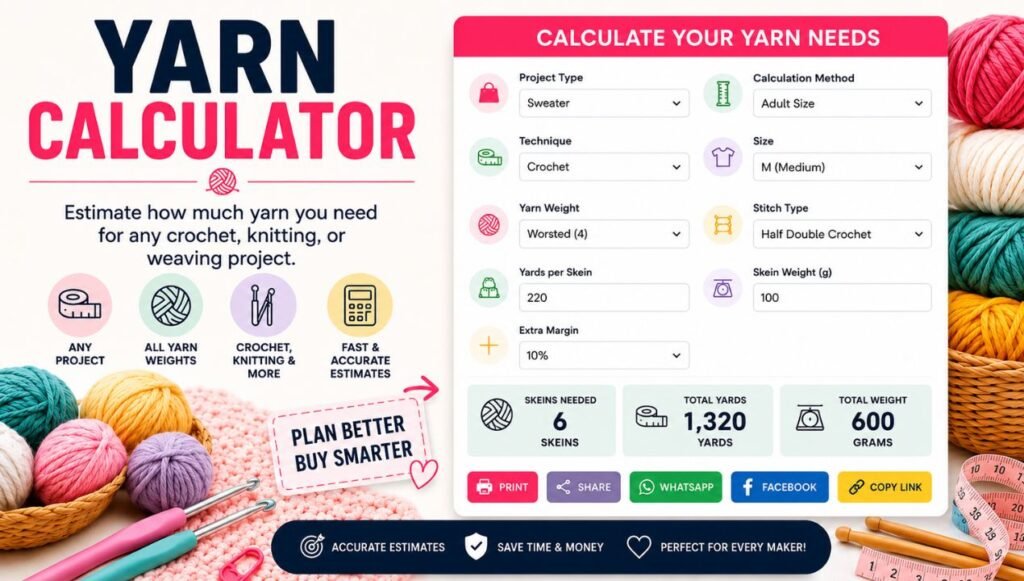
A yarn skein calculator is an online tool that helps estimate how much yarn you need for a crochet, knitting, Tunisian crochet, or weaving project. It calculates an approximate yarn requirement using several important factors, such as:
- Type of project
- Crochet or knitting technique
- Yarn weight
- Stitch type
- Project measurements
- Adult size, child age, or standard project size
- Meters or yards per skein
- Skein weight in grams
- Extra margin for finishing, seams, borders, and tension differences
The goal is not to replace a professional pattern, but to give you a useful estimate before starting. This is especially helpful when you want to create your own design, adapt a pattern, resize a garment, or buy yarn before it sells out.
Why You Should Calculate Yarn Before Buying
Many crochet and knitting projects fail or become more expensive because the yarn amount was not planned correctly. A small mistake in estimation can cause several problems:
You may run out of yarn before finishing the project. If the same color lot is no longer available, the final piece can look uneven.
You may buy too much yarn and spend more money than necessary.
You may choose a yarn weight that changes the size, texture, drape, or thickness of the final project.
You may underestimate dense stitches like single crochet, bobble stitch, cables, waffle stitch, or textured patterns.
You may forget to add extra yarn for seams, ribbing, sleeves, borders, tassels, fringe, pockets, straps, collars, or finishing details.
Using a yarn calculator helps reduce those mistakes. It gives you a smarter estimate before you shop, making the entire project easier to plan.
How the Yarn Skein Calculator Works
This calculator estimates yarn usage based on the information you enter. The most important values are the project type, yarn weight, stitch type, and meters per skein.
For example, a blanket usually needs much more yarn than a scarf. A sweater needs more yarn than a vest. A tight crochet stitch usually consumes more yarn than an open lace stitch. A bulky yarn may require fewer meters than a fine yarn, but each skein may also have fewer meters.
The calculator combines these details and gives you an estimated number of skeins. The result includes a recommended margin so you have extra yarn for small changes, finishing, joining, or tension differences.
How to Use the Yarn Skein Calculator
Using the calculator is simple:
First, choose the technique you are using, such as crochet, knitting, Tunisian crochet, or another available method.
Then select the project type. You can choose from many options, including sweaters, blouses, scarves, blankets, shawls, baby garments, bags, amigurumi, home decor pieces, and more.
Next, choose the calculation method. You can calculate by manual measurements, adult size, child age, or standard project size.
After that, enter or select the yarn weight. This matters because lace yarn, fingering yarn, DK yarn, worsted yarn, bulky yarn, and jumbo yarn behave differently.
Choose the stitch type or stitch pattern. Dense stitches need more yarn, while open and lace stitches usually need less.
Finally, enter how many meters or yards each skein has and the weight of each skein in grams. The calculator will show the estimated number of skeins you should buy.
Who Is This Tool For?
This yarn calculator is useful for beginners, intermediate makers, and advanced crafters.
Beginners can use it to avoid buying yarn blindly.
Crochet lovers can estimate yarn for blankets, tops, amigurumi, bags, shawls, and accessories.
Knitters can plan sweaters, cardigans, scarves, beanies, baby clothes, and textured garments.
Pattern designers can use it as a quick planning tool before writing or testing a design.
Online yarn sellers can recommend estimated quantities to customers.
Craft bloggers can use it as a helpful tool inside tutorials or project guides.
Anyone who wants to know how much yarn to buy can use this calculator before starting a project.
Best Projects You Can Calculate With This Tool
This tool can estimate yarn for many types of projects, including:
Sweaters, cardigans, blouses, crop tops, vests, ponchos, shawls, wraps, scarves, cowls, beanies, gloves, mittens, socks, baby blankets, adult blankets, throws, afghans, amigurumi, bags, baskets, table runners, pillow covers, cushion covers, rugs, wall hangings, pet sweaters, doll clothes, headbands, hair accessories, and many more.
The more accurate your inputs are, the better the estimate will be.
Why Yarn Weight Matters
Yarn weight changes the amount of yarn needed. A fine yarn usually has more meters per skein, but it may require more stitches to cover the same area. A bulky yarn covers space faster, but each skein may contain fewer meters.
That is why two skeins of yarn can be completely different. A 50 g skein of lace yarn may contain hundreds of meters, while a 100 g skein of super bulky yarn may contain much less length.
This calculator lets you select the yarn thickness so the estimate better matches the type of material you plan to use.
Common yarn weights include lace, super fine, fine, light, DK, worsted, aran, bulky, super bulky, jumbo, cotton thread, trapillo, macramé cord, baby yarn, sock yarn, chenille, and roving yarn.
Why Stitch Type Changes Yarn Usage
Not all stitches use the same amount of yarn.
A single crochet fabric is usually dense and can consume more yarn. A double crochet or treble crochet fabric may cover more height with fewer stitches. Lace patterns are more open and often use less yarn. Textured stitches like bobble, popcorn, puff, waffle, cables, ribbing, basketweave, brioche, and raised stitches can use significantly more yarn.
That is why the stitch selection is important. If you are making a project with a highly textured stitch, it is safer to add extra yarn.
Why You Should Add Extra Yarn
Even with a good estimate, it is smart to buy a little extra yarn. Handmade projects can vary because of tension, hook size, needle size, stitch style, yarn fiber, washing behavior, and personal adjustments.
Extra yarn is useful for:
- Borders
- Seams
- Sleeves
- Collars
- Ribbing
- Pockets
- Handles
- Tassels
- Fringe
- Repairs
- Gauge differences
- Color matching
If your project uses a specific dye lot, buying enough yarn at once is especially important. A later skein of the same color may look slightly different.
Yarn Calculator for Crochet Projects
Crochet often uses more yarn than knitting because many crochet stitches are thicker and denser. Projects like amigurumi, bags, baskets, rugs, waffle stitch blankets, and textured tops may require extra yarn.
This crochet yarn calculator is helpful when planning:
Crochet blankets, granny square projects, baby clothes, crochet tops, amigurumi toys, bags, baskets, cardigans, shawls, scarves, hats, home decor items, and accessories.
For crochet, it is recommended to enter accurate measurements and choose the stitch type closest to your project.
Yarn Calculator for Knitting Projects
Knitting can produce a flexible fabric with good drape, but yarn usage still depends on stitch pattern and garment construction. Stockinette stitch, garter stitch, ribbing, cables, lace, brioche, and jacquard all use different amounts of yarn.
This knitting yarn calculator can help estimate yarn for:
Sweaters, cardigans, scarves, hats, socks, baby garments, blankets, cowls, shawls, vests, mittens, textured garments, and accessories.
If your design includes cables, ribbing, or colorwork, consider adding extra margin.
How Accurate Is a Yarn Skein Calculator?
A yarn calculator provides an estimate, not an exact guarantee. The final amount of yarn can change depending on:
Your tension or gauge, hook or needle size, stitch density, fiber type, project shape, borders, seams, pattern adjustments, and washing or blocking.
For the most accurate result, make a small gauge swatch using the same yarn, hook or needle, and stitch you will use in the final project. Then measure how much yarn your sample used and compare it with the calculator estimate.
Even so, this tool is very useful for planning and buying yarn with more confidence.
When Should You Use This Calculator?
Use this calculator before buying yarn, before starting a custom project, before changing yarn weight in a pattern, before resizing a garment, before selling handmade items, before creating a crochet or knitting tutorial, or before estimating the material cost of a handmade order.
It is especially useful when you do not have a fixed pattern and need a fast estimate.
Tips for Better Yarn Estimates
For better results, use the real meters or yards listed on the yarn label.
Choose the stitch type that is closest to your project.
Use the correct project category.
Add a margin if you are unsure.
Buy the same dye lot when possible.
If you are making a garment, consider sleeves, collar, ribbing, and finishing.
If you are making a blanket, remember that borders can use a lot of yarn.
For amigurumi, remember that tight stitches usually consume more yarn.
For textured stitches, buy extra yarn.
For lace projects, the calculator may estimate less yarn, but blocking and size changes can still affect the final result.
Start Calculating Your Yarn Now
Before you buy your next skein, use the calculator above and get a fast estimate. It only takes a few seconds and can help you avoid one of the most common problems in crochet and knitting: not knowing how much yarn to buy.
Enter your project type, yarn weight, stitch type, measurements, and skein details. The calculator will estimate how many skeins you need so you can plan your project with more confidence.
Frequently Asked Questions
How many skeins of yarn do I need for a blanket?
The number of skeins needed for a blanket depends on the blanket size, yarn weight, stitch type, hook or needle size, and meters per skein. A baby blanket may need only a few skeins, while a large adult blanket can require many more. Use the calculator by selecting blanket as the project type and entering your measurements for a better estimate.
How many skeins of yarn do I need for a sweater?
A sweater usually needs more yarn than a scarf or vest because it includes a front, back, sleeves, collar, and finishing details. The exact amount depends on the size, yarn thickness, stitch pattern, and design. Use the adult size option or manual measurements to estimate the number of skeins.
Is crochet yarn usage different from knitting?
Yes. Crochet often uses more yarn than knitting because many crochet stitches create a thicker and denser fabric. However, the difference depends on the stitch, yarn weight, and project style.
What information do I need to use the yarn calculator?
You need the project type, technique, yarn weight, stitch type, meters or yards per skein, skein weight in grams, and either project measurements, adult size, child age, or a standard size option.
Should I buy extra yarn?
Yes. It is usually smart to buy extra yarn, especially if the project has borders, sleeves, seams, tassels, fringe, textured stitches, or a specific dye lot. Extra yarn also helps if your tension is different from the estimate.
What does meters per skein mean?
Meters per skein refers to the total length of yarn in one skein. This is usually shown on the yarn label. It is one of the most important values for calculating how many skeins you need.
Can I use this calculator for crochet?
Yes. This calculator works for crochet projects, including blankets, tops, amigurumi, bags, scarves, shawls, hats, baby clothes, and home decor items.
Can I use this calculator for knitting?
Yes. You can use it for knitting projects such as sweaters, cardigans, scarves, socks, beanies, baby garments, blankets, shawls, cowls, and textured pieces.
Why does stitch type affect the result?
Different stitches use different amounts of yarn. Dense, textured, raised, or cable-style stitches usually need more yarn. Open lace stitches usually need less.
Is the result exact?
No calculator can guarantee an exact yarn amount because tension, hook size, needle size, fiber, stitch pattern, and finishing details can change the final usage. The result is a practical estimate to help you plan better.