
A kitchen sponge can go from clean to sour faster than almost anything near the sink.
One day it smells normal. The next, it has that damp, unpleasant odor that makes you question whether it is cleaning your dishes or spreading the problem around.
If you want to know how to keep kitchen sponge from smelling without bleach, the answer is not stronger fragrance or harsher chemicals. It is better rinsing, faster drying, cleaner storage, and knowing when the sponge has reached the end of its useful life.
Quick Answer
To keep a kitchen sponge from smelling without bleach, rinse it thoroughly after each use, squeeze out as much water as possible, let it dry in an open-air holder, and clean it regularly with hot water, dish soap, white vinegar, or baking soda.
The most important habit is drying. A sponge that stays wet for hours is much more likely to smell. Bleach is not the only option, but no method can save a sponge forever. If the odor keeps coming back quickly, replace it.
Why Kitchen Sponges Start Smelling Bad
A sponge is designed to absorb. That is exactly why it becomes smelly.
It soaks up water, food particles, grease, soap residue, and tiny bits from plates, cutting boards, counters, and cookware. If it sits wet near the sink, all that trapped material can turn into a sour, musty smell.
Why does the odor come back even after you rinse it? Because rinsing the outside is not always enough. Food residue and moisture can stay deep inside the sponge. Once the sponge warms up or gets wet again, the smell becomes noticeable.
The problem is not just that the sponge is dirty. The real problem is that it stays damp and full of trapped residue.
Why People Want a Bleach-Free Solution
Not everyone wants to use bleach in the kitchen. Some people dislike the smell. Others prefer gentler cleaning habits around dishes, countertops, pets, or kids. Some simply want a practical routine that does not involve strong chemicals every day.
Can you keep a sponge fresh without bleach? Yes, in many cases. But the goal should be realistic: reduce odor, keep the sponge cleaner between uses, and replace it when needed.
A bleach-free routine works best when you treat the sponge as a tool that needs daily care, not as something that can sit wet beside the sink for days.
What a Fresh Sponge Should Smell Like
A clean sponge should smell neutral. It does not need to smell like lemon, flowers, or detergent. If it has no sour, musty, greasy, or old-food odor, that is a good sign.
If your sponge smells strongly of soap, that may not always mean it is cleaner. Sometimes it just means fragrance is covering another smell.
What should you avoid? Do not rely on scented dish soap alone. A pleasant scent can hide odor for a short time, but it will not fix trapped food particles or moisture.
The best sponge smell is almost no smell at all.
The Main Cause: A Sponge That Never Dries
Moisture is the biggest reason a kitchen sponge smells bad.
Think about where most sponges live: beside the sink, inside a wet dish, under a soap dispenser, or flat on the counter where water pools underneath. That keeps the sponge damp for hours.
A wet sponge does not get a chance to reset. It stays warm, closed, and moist inside. That is why drying is more important than adding another cleaning product.
Is it better to leave a sponge flat or standing up? Standing up is usually better because more air can reach the surface. A sponge holder with drainage is much better than letting the sponge sit in a puddle.
Step-by-Step: How to Keep Kitchen Sponge From Smelling Without Bleach
1. Rinse the Sponge Immediately After Use
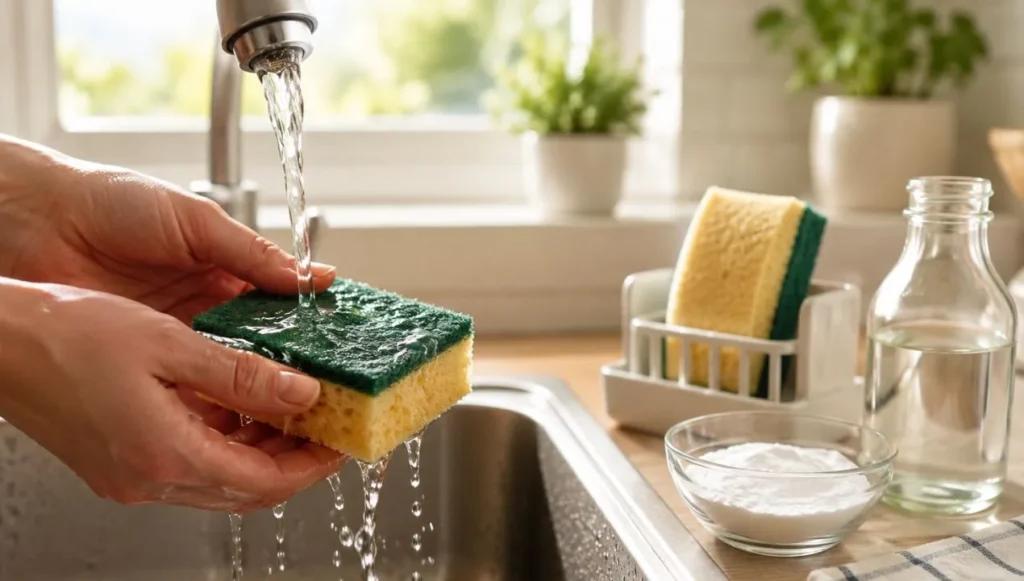
After washing dishes or wiping a counter, rinse the sponge under running water. Do not give it a quick splash and walk away. Squeeze it several times while rinsing so water moves through the inside.
This helps push out food particles, grease, and soap residue.
If you used the sponge on something oily, rinse longer. Grease clings to sponge fibers and can make the smell worse later.
2. Wash It With Dish Soap
A sponge used for cleaning also needs to be cleaned.
Add a small amount of dish soap directly to the sponge, work it through with warm water, then rinse until the water runs clear. This is especially useful after cleaning pans, plates with sauce, or anything with strong food smells.
Should you use a lot of soap? No. Too much soap can stay inside the sponge and create residue. Use enough to clean it, then rinse well.
3. Squeeze Out as Much Water as Possible
This step seems too simple, but it matters.
After rinsing, squeeze the sponge firmly until it is no longer dripping. The less water trapped inside, the faster it dries and the less likely it is to smell.
Do not toss it back into the sink wet. That is one of the fastest ways to bring the odor back.
4. Store It Where Air Can Reach It
A sponge should not sit in the bottom of the sink. It should not sit inside a closed container. It should not stay pressed against a wet surface.
Use a sponge holder with drainage holes, a small rack, or any open spot where air can move around it. The goal is simple: keep it elevated and allow water to drain away.
Where is the worst place to keep a sponge? Inside the sink, especially if the sink is often wet. That turns the sponge into a moisture trap.
5. Use White Vinegar for Odor Control
White vinegar can help reduce sour smells in a sponge. It is not a magic fix, but it can be useful when the sponge smells stale and you want a bleach-free option.
Soak the sponge in white vinegar for a short period, then rinse it very well and let it dry completely. Use this as an occasional odor-control step, not as a replacement for daily rinsing and drying.
What if the sponge still smells after vinegar? Replace it. If the odor survives cleaning, the sponge is probably holding too much residue inside.
6. Use Baking Soda for a Fresher Sponge
Baking soda is another simple option for sponge odor. Sprinkle a little baking soda onto the wet sponge, work it through gently, rinse well, and squeeze it dry.
Baking soda is useful when the smell is mild and you want to neutralize odor without adding fragrance.
Should you mix baking soda and vinegar in the sponge? It is better to use them separately. Together, they react quickly and lose much of their practical cleaning effect.
7. Let It Dry Fully Overnight
A sponge should have time to dry completely between heavier uses. If your sponge is always wet, it will almost always smell eventually.
If you cook often or wash dishes several times a day, consider using two sponges and rotating them. One can dry while the other is in use.
Is rotating sponges worth it? For busy kitchens, yes. It helps prevent one sponge from staying damp all day.
Common Signs Your Sponge Needs More Than a Rinse
A smelly sponge gives warning signs before it becomes truly unpleasant.
If it smells sour after one use, it may have buildup inside. If it feels slimy, it needs cleaning or replacement. If it leaves odor on your hands, dishes, or sink area, it should not be used on anything that touches food.
If the sponge has dark stains, damaged pieces, or a smell that returns immediately after cleaning, it is time to throw it away.
Can an old sponge be refreshed forever? No. Some sponges are simply past their limit. Cleaning helps, but replacement is part of good kitchen hygiene.
Best Bleach-Free Options Depending on the Problem
If the sponge smells like old food, rinse it deeply with warm water and dish soap. Focus on pushing water through the center.
If the sponge smells sour, use white vinegar occasionally, then rinse and dry it fully.
If the sponge smells stale but not terrible, baking soda may be enough.
If the sponge smells fine but stays wet all day, change how you store it. Better drainage may solve the problem.
If the sponge smells bad again right after cleaning, replace it. At that point, the issue is not the method. It is the sponge.
Vinegar vs. Baking Soda vs. Better Drying
White vinegar is best when the sponge has a sour smell. It helps cut through certain odors and residue.
Baking soda is better for mild odor and general freshness. It is simple, gentle, and easy to rinse away.
Better drying is the most important long-term solution. A sponge that dries quickly is much less likely to smell, even if you do not deep-clean it every day.
Which one should you try first? Start with drying. Then add dish soap cleaning. If the odor remains, use vinegar or baking soda. If the smell still comes back, replace the sponge.
What About the Dishwasher?
Some people clean sponges in the dishwasher, especially during a hot cycle. This can help freshen certain sponges if they are dishwasher-safe.
But not every sponge belongs in the dishwasher. Some materials break down, trap detergent, or fall apart faster. Check the sponge type first.
If you use the dishwasher method, place the sponge where it will not fall apart, block moving parts, or collect food debris. Afterward, let it dry fully.
Is the dishwasher better than vinegar or baking soda? It depends on the sponge and your routine. For many people, daily rinsing and proper drying matter more than occasional deep cleaning.
What You Should Not Do
Do not leave the sponge soaking in dirty dishwater. It may look like it is being rinsed, but it is actually absorbing more residue.
Do not keep it under a soap bottle where water collects. That prevents drying.
Do not use the same sponge for everything. A sponge used on greasy pans, counters, and dishes will smell faster than one used carefully.
Do not ignore a bad smell. If the sponge smells unpleasant, it is no longer doing its job well.
Do not mix random cleaning products in an attempt to make the sponge “extra clean.” Use one method at a time and rinse thoroughly.
Real Kitchen Examples
A sponge used after cooking fish, eggs, or greasy food may smell bad quickly if it is only lightly rinsed. In that case, wash the sponge with dish soap, rinse it deeply, and dry it upright.
A sponge left flat on the sink edge may smell even if it was cleaned. The issue is storage. Put it in a holder that drains.
A sponge used in a small apartment kitchen may stay wet because the sink area has little airflow. Rotating two sponges can help.
A sponge that smells after every cleaning method is probably too old or too loaded with residue. Replacing it is the cleanest choice.
Mistakes That Cause You to Lose Results
Leaving the Sponge in the Sink
The sink is usually wet, and a sponge sitting there absorbs moisture again and again. That keeps the odor cycle going.
Instead, rinse the sponge, squeeze it dry, and place it in an open holder.
Using Scented Soap as the Only Fix
Scented soap may cover odor, but it does not remove trapped food or moisture. Once the fragrance fades, the smell returns.
Instead, clean the sponge thoroughly and focus on drying.
Forgetting to Clean the Sponge After Greasy Dishes
Grease holds odor. If you use the sponge on oily pans and then leave it near the sink, the smell can become stronger.
Instead, rinse with warm water and dish soap until the sponge feels clean.
Storing It in a Closed Container
A closed container traps moisture. That can make the sponge smell worse, even if it was rinsed.
Instead, use open-air storage with drainage.
Trying to Save a Sponge That Should Be Replaced
Some sponges cannot be fixed. If the smell returns immediately, replacement is the smarter move.
Instead of fighting the same sponge for days, start fresh and improve your storage routine.
Fresh Sponge Checklist
Use this quick checklist to keep your kitchen sponge fresh without bleach:
- Rinse the sponge thoroughly after every use.
- Use dish soap after greasy or strong-smelling foods.
- Squeeze out water until the sponge stops dripping.
- Store it upright in a holder with drainage.
- Keep it out of dirty dishwater.
- Use vinegar occasionally for sour odor.
- Use baking soda for mild stale smells.
- Let the sponge dry completely between uses when possible.
- Rotate sponges in busy kitchens.
- Replace the sponge when odor keeps returning.
Suggested Image Concept for the Article
Image format recommendation: 1200×720 horizontal image for blog and Google Discover.
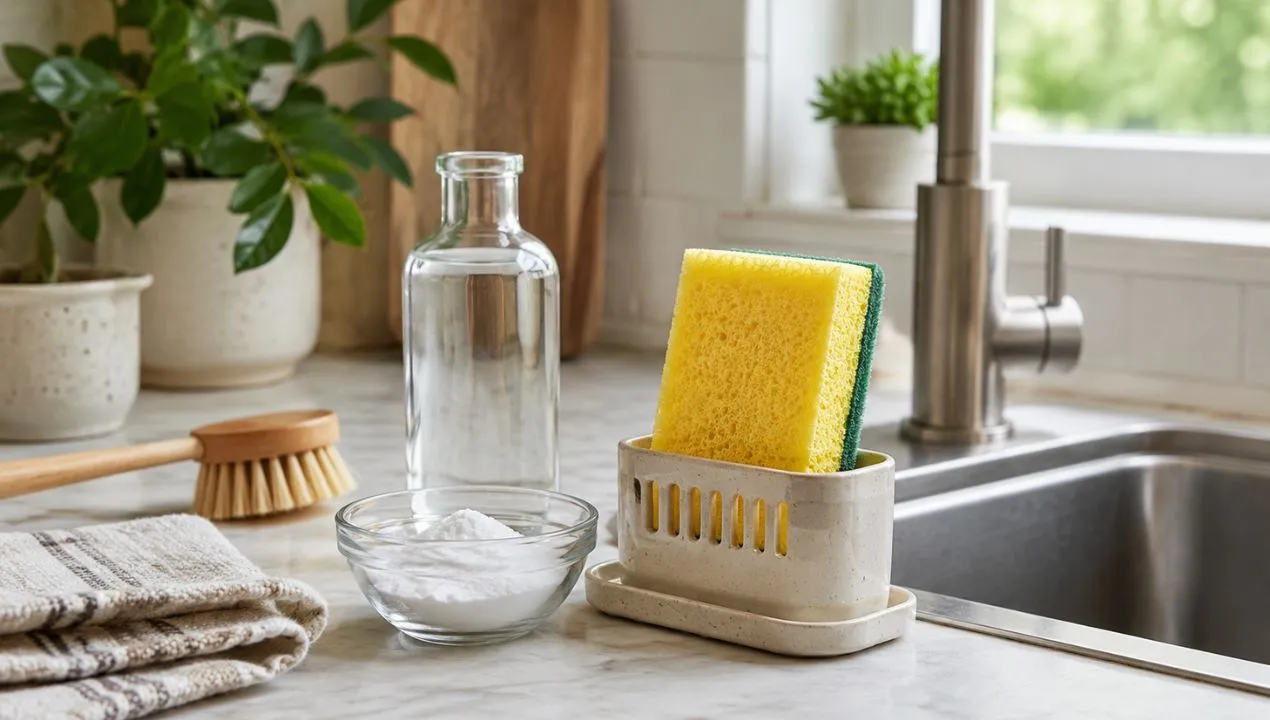
Visual idea: A bright kitchen sink scene with a clean sponge drying upright in a small holder, a bowl of baking soda, a small unbranded bottle of white vinegar, fresh dish towels, and natural light near the counter.
Alt text: Clean kitchen sponge drying upright near baking soda and vinegar for natural odor control without bleach.

Final Recommendation Based on User Profiles
If you want the fastest fix, wash the sponge with dish soap, rinse it deeply, squeeze it dry, and place it upright where air can reach it.
If the sponge smells sour, use white vinegar occasionally, then rinse and dry it completely.
If you want the simplest natural routine, use baking soda for mild odor and focus on daily drying.
If your kitchen is busy, rotate two sponges so one can dry while the other is in use.
If the sponge smells bad again right after cleaning, replace it. A fresh sponge plus better habits works better than trying to rescue one that is already too far gone.
FAQs
Why does my kitchen sponge smell bad so quickly?
A kitchen sponge smells bad quickly because it traps food particles, grease, soap residue, and moisture. If it stays wet near the sink, odor develops faster. Rinsing it deeply, squeezing out water, and storing it where air can circulate can help prevent the smell from returning.
How do I keep a kitchen sponge from smelling without bleach?
Rinse the sponge thoroughly after each use, clean it with dish soap, squeeze it dry, and store it upright in a holder with drainage. For odor control, use white vinegar or baking soda occasionally, then rinse well and let the sponge dry completely.
Is vinegar good for a smelly kitchen sponge?
White vinegar can help reduce sour odors in a kitchen sponge. Soak the sponge briefly, rinse it thoroughly, and let it dry in open air. Vinegar works best as an occasional freshness step, not as a replacement for daily rinsing, drying, and timely replacement.
Can baking soda remove sponge odor?
Baking soda can help with mild sponge odor. Sprinkle a small amount onto a wet sponge, work it through gently, rinse well, and squeeze out the water. It is useful for freshness, but if the sponge still smells bad afterward, it may need to be replaced.
When should I throw away a kitchen sponge?
Throw away a kitchen sponge when it smells bad even after cleaning, feels slimy, breaks apart, has stubborn stains, or leaves odor on your hands or dishes. A sponge is not meant to last forever, and replacing it is often the safest and cleanest solution.