
Have you ever felt the frustration of dealing with a malfunctioning refrigerator? Whether it’s not cooling properly, making strange noises, or accumulating ice, these issues can disrupt your daily routine. Understanding how to diagnose and address these problems is crucial for anyone looking to maintain their appliance efficiently. Here’s a comprehensive guide that will help you identify and solve common refrigerator problems effectively.
Understanding Common Refrigerator Problems
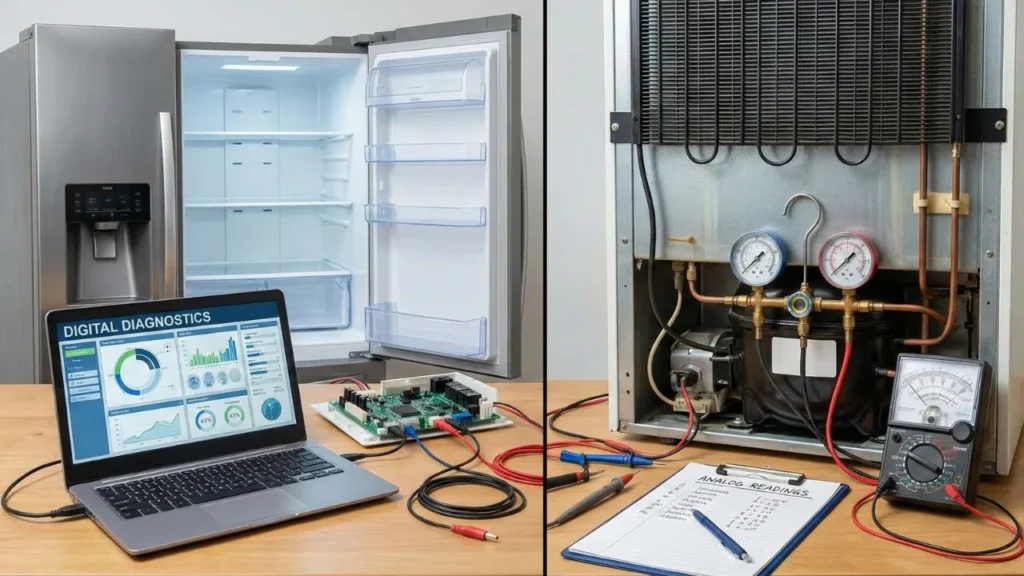
When faced with a malfunctioning refrigerator, it’s important to first articulate the issue clearly. This means thinking about the symptom in simple terms. For example, you might say: “my fridge is not cooling” or “my refrigerator makes noise and turns off”. Identifying the problem accurately is the first step toward finding a solution.
Common symptoms that indicate refrigerator issues include:
- Not cooling: The appliance is powered on but fails to maintain a cold temperature.
- Excessive ice build-up: Ice accumulates in the freezer or on the evaporator coils.
- Strange noises: Sounds such as buzzing, clicking, or grinding may indicate mechanical problems.
- Leaking water: Water pooling inside or underneath the fridge could point to a clogged drain or a damaged seal.
Step-by-Step Diagnosis
Once you’ve identified the symptom, the next step is to evaluate the type of refrigerator you have. Different models, such as digital and analog systems, require distinct approaches for troubleshooting.
To start diagnosing your issue:
- Type the symptom clearly (e.g., “not cooling”, “heavy frost”, “intermittent noise”).
- Select the type of refrigerator you own.
- Follow the guide provided, which will lead you through straightforward checks.
This structured approach not only helps in identifying the problem but also ensures that you are not overwhelmed by unnecessary technical details.
Guidelines for DIY Troubleshooting
Our troubleshooting guides are tailored for both technicians and DIY enthusiasts with basic knowledge. They feature:
- Reference measurements: Essential data to guide your checks.
- Safety checklists: Important precautions to take before starting repairs.
- Fault hierarchy: Listing possible issues from simple to complex, based on cost and likelihood.
When handling your fridge, remember to:
- Unplug the appliance before starting any work.
- Wear gloves to protect yourself from sharp edges.
- Ensure your workspace is well-ventilated.
Specifics on Digital and Analog Refrigerators
The troubleshooting path differs significantly between digital and analog refrigerators, and understanding these differences is crucial for effective repairs.
Digital Refrigerators: These models often include electronic control boards and sensors. Common issues may involve:
- Control board malfunctions
- Sensor failures (NTC)
- On-screen error codes that need decoding
- PWM-controlled fan issues
Analog Refrigerators: These rely on traditional mechanical components. Typical problems include:
- Thermostat failures
- Bimetal or defrost problems
- Compressor relay or PTC issues
- Wiring problems
Conducting Quick Diagnoses
Each guide features a quick diagnosis section that outlines initial checks. These checks can often resolve a large percentage of common refrigerator issues without the need for extensive repairs.
Some of the primary checks include:
- Verifying power supply.
- Checking thermal protectors.
- Assessing fan operation.
- Testing electrical continuity.
By starting with these basic checks, you can often pinpoint the issue without needing to delve into complex repairs or part replacements.
Handling Complex Issues
In some cases, symptoms might indicate more serious issues that require professional intervention. For example:
- Refrigerant leaks: These require specialized tools and certifications to handle safely.
- Clogged capillaries: This issue typically necessitates professional service to diagnose and rectify.
If you encounter symptoms that don’t fit the standard troubleshooting guides or if you feel out of your depth, it’s advisable to consult a qualified technician.
Feedback and Continuous Improvement
After using the troubleshooting tools, you are encouraged to provide feedback. This feedback helps developers enhance the guides and prioritize new solutions based on brand and model. Your input is invaluable for improving the overall user experience.
As a final note, remember that while DIY repairs can save time and money, safety should always come first. If you encounter any uncertainty during the troubleshooting process, reach out to a professional.
Frequently Asked Questions
Why is my refrigerator not cooling?
Common causes include poor airflow (too close to the wall), wrong temperature settings, door seals leaking, or heavy frost buildup. Dirty condenser coils can also reduce cooling fast.
If you hear the compressor running but it still won’t cool, the issue may be the fan, a sensor/thermostat, or the sealed system.
Why does my fridge cool but not freeze?
This often happens when airflow to the freezer is blocked by ice, poor circulation, or a weak fan. Overloading the freezer or a leaky door seal can also prevent proper freezing.
If the freezer never gets truly cold, it could be a sealed-system problem or a failing component.
Why does the freezer overfreeze but the fridge section is warm?
Many fridges cool the lower section by pushing cold air down from the freezer. If ice blocks vents or the fan isn’t moving air, the fridge section won’t get cold.
A stuck air damper or faulty temperature sensing can also cause uneven cooling.
What does it mean when ice forms on the freezer back wall?
That usually points to a defrost problem (heater, defrost thermostat, sensor, timer/control board). Ice builds up until it blocks airflow.
A door left slightly open or a worn gasket can also let moisture in and create heavy frost.
Why does my fridge make a “click” sound and not start?
That click is often the overload protector shutting the compressor off after a failed start attempt. A bad start relay/PTC is a common culprit.
If it clicks every few minutes, it’s time to check the start components, power supply, and compressor condition.
Why is the compressor extremely hot?
Compressors can run hot, but if it’s burning hot and the fridge isn’t cooling, it may be overworking. Dirty coils and poor ventilation make this worse.
A failing fan, high heat load, or internal system issue can also drive temperatures up.
Why is my refrigerator making weird noises or vibrating?
Vibration is often from leveling issues—uneven feet, the fridge touching the wall, or loose internal trays. Sometimes tubing vibrates against the frame.
If the sound comes from the freezer area, the fan may be hitting ice buildup.
Why is my fridge leaking water onto the floor?
A clogged defrost drain is the #1 cause—water can’t reach the drain pan and overflows. A cracked or misaligned drain pan can also leak.
If water pools inside the fridge, check the drain path, door gasket, and frost buildup.
Why does my refrigerator smell bad even after cleaning?
Odors often come from the drain tube or the rear drain pan where water and residue collect. Cleaning only the inside may not fix it.
Old spills trapped in seals, corners, or plastic liners can also hold odors.
How do I know if the thermostat is bad?
If it never shuts off (freezes everything) or never kicks on (stays warm) despite changing settings, the control may be failing.
Big temperature swings without a clear reason can also point to a faulty thermostat or sensor.
How do I know if the freezer fan isn’t working?
If cooling is uneven, there’s heavy frost on the back wall, and the fridge section warms up, the fan is a top suspect. Many models have a soft fan hum.
Without airflow, cold can’t circulate and performance drops hard.
What should I check first if my refrigerator suddenly stops cooling?
Check power, settings, door seal, and ventilation space around the unit. Then look for heavy frost in the freezer.
If the compressor is silent or it clicks repeatedly, the issue may be electrical or start-related.
How long does it take a refrigerator to cool after turning it on?
It may feel cool within 1–2 hours, but full temperature stabilization can take 6–24 hours depending on size and how full it is.
If it still won’t cool properly after 24 hours, you likely have a real fault.
What is the ideal temperature for a fridge and freezer?
A common target is 37–41°F (3–5°C) for the fridge and 0°F (-18°C) for the freezer. That keeps food safe without overfreezing.
If your model has a dial, adjust gradually and watch stability over a day.
Why does my fridge turn on and off too frequently?
This can be normal in hot weather or with frequent door openings, but excessive cycling can mean a bad sensor, leaky gasket, or dirty coils.
Load matters too—very full or very empty can affect cycling patterns.
How can I tell if my refrigerator is low on refrigerant?
Signs include the compressor running a lot with weak cooling, uneven temperatures, or poor freezing without normal frost patterns.
Refrigerant checks require proper tools and should be handled by a technician for safety and accuracy.
Why is my fridge freezing food in the refrigerator section?
It’s often set too cold, food is blocking air vents, or the sensor/thermostat is misreading temperature. A stuck damper can push too much cold air in.
Move items away from vents and lower the setting slightly to test.
Why won’t the door close well or why is the gasket pulling away?
A dirty, warped, or torn gasket lets humid air in, causing frost and higher energy use. Sometimes the door is misaligned.
Clean the gasket, remove obstructions, and check sealing—if it won’t seal, replacement may be needed.
Why is there condensation (“sweating”) on the outside or around the door?
High humidity plus a weak door seal is the most common reason. Frequent opening and internal frost can add moisture too.
If it’s constant, check gasket condition, leveling, and airflow around the fridge.
When should I call a technician for refrigerator diagnostics?
Call if you smell burning, see sparks, hear repeated clicking without starting, or the unit won’t cool after 24 hours with basic checks done.
Also call if you suspect defrost control issues or refrigerant/sealed-system problems—those need proper testing.