A clean kitchen or bathroom can still feel dirty when the sink drain smells bad.
That sour, musty, or rotten odor usually comes from trapped food, grease, soap residue, hair, stagnant water, or buildup inside the drain. The good news is that you can often fix it without harsh chemicals.
Here is how to remove bad smell from sink drain naturally using simple, practical methods that target the source instead of just covering the odor.
Quick Answer
To remove bad smell from sink drain naturally, flush the drain with hot water, clean visible residue around the drain opening, use baking soda and white vinegar carefully, rinse again, and keep the drain dry and clear between uses.
For kitchen sinks, grease and food buildup are common causes. For bathroom sinks, hair, soap scum, toothpaste, and stagnant water are usually the problem. If the smell keeps coming back or smells like sewage, it may need a plumber.
Why Sink Drains Start Smelling Bad
A sink drain is not just a hole where water disappears. It is a narrow passage where small bits of residue can stick to the walls.
In the kitchen, this may include cooking oil, food scraps, coffee grounds, sauce, dish soap, and tiny particles washed from plates. In the bathroom, it is usually hair, toothpaste, shaving cream, soap film, skin oils, and beauty products.
Why does the smell become worse over time? Because buildup does not always wash away completely. It clings to the inside of the drain, stays damp, and slowly creates odor.
That is why a sink can look clean on the surface but still smell bad from below.
Why People Search for Natural Drain Odor Solutions
Many people do not want to pour strong chemical cleaners into a sink every time it smells. Some dislike the fumes. Others worry about pipes, septic systems, pets, children, or mixing products by mistake.
Can you remove sink drain odor without harsh chemicals? In many cases, yes. Natural methods work well when the smell comes from light buildup, grease, soap residue, or stagnant water.
But there is one important detail: natural cleaning works best when the drain is not severely clogged. If water drains slowly, backs up, or the smell is strong and sewage-like, odor control alone may not solve the problem.
First, Identify the Type of Sink Smell
Before cleaning, pay attention to the odor. It can tell you where the problem might be.
A sour smell often points to food residue, grease, or stagnant water. A musty smell may come from moisture, biofilm, or a rarely used drain. A rotten smell may come from trapped organic material. A sewage smell may indicate a plumbing issue, especially if it is strong or keeps returning.
Is the smell coming from the kitchen sink or bathroom sink? That matters because the causes are different. Kitchen drains usually need grease and food control. Bathroom drains usually need hair and soap buildup removal.
Check the Drain Opening First
Start with what you can see.
Look around the drain rim, stopper, strainer, and overflow opening if your sink has one. Bad smells often come from visible residue near the top, not deep inside the plumbing.
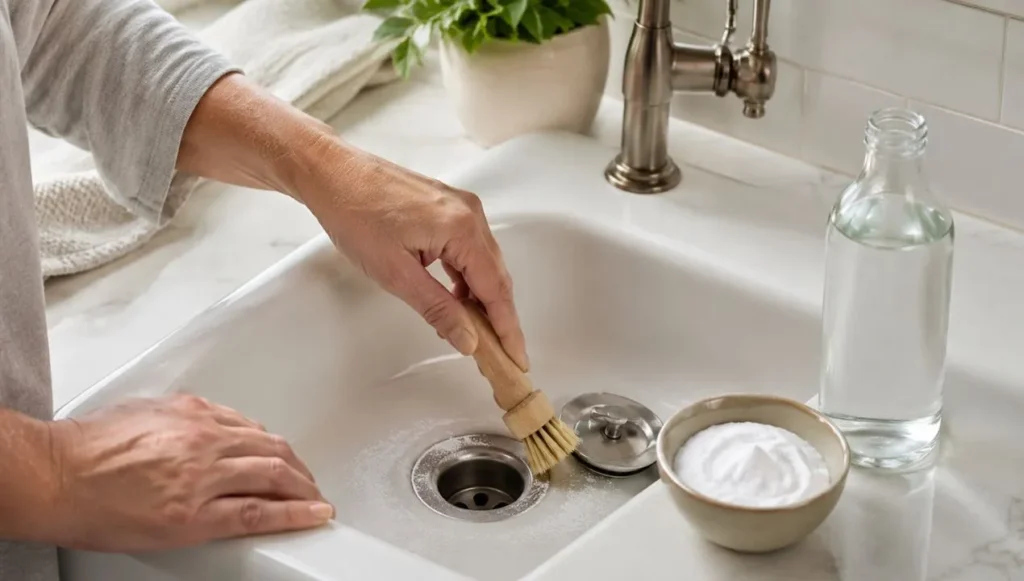
Remove the strainer or stopper if it is easy to take out. Rinse it under hot water. Scrub away sticky residue with dish soap and an old toothbrush or small cleaning brush.
What if the drain cover looks clean but still smells? Then the odor may be farther inside the drain or coming from the trap under the sink.
Step-by-Step: How to Remove Bad Smell From Sink Drain Naturally
1. Flush the Drain With Hot Water
Run hot water down the drain for a short time to soften grease, soap residue, and light buildup. For many sinks, very hot tap water is enough.
Be careful with boiling water. It may not be ideal for all pipe materials, sink finishes, or fragile plumbing setups. If you are unsure, use hot tap water instead.
This first flush helps loosen residue before you use any natural cleaning method.
2. Clean the Drain Rim and Stopper
A smelly drain is often worse near the opening. Food, soap scum, hair, and grime can collect around the rim.
Use dish soap, warm water, and a small brush. Clean the drain cover, stopper, rubber seal, and visible edges. In bathroom sinks, the stopper can hold a surprising amount of odor.
Should you skip this step and only pour something down the drain? No. If the stopper is dirty, the smell may return quickly even after flushing the pipe.
3. Use Baking Soda for Odor Absorption
Pour baking soda into the drain opening. Let it sit for a little while so it can help absorb odor and loosen mild residue.
Baking soda is useful because it does not rely on heavy fragrance. It helps neutralize unpleasant smells instead of covering them.
This works especially well for mild sour odors in kitchen sinks or stale odors in bathroom drains.
4. Add White Vinegar Carefully
After the baking soda sits, pour white vinegar into the drain. You may see fizzing. That reaction can help disturb light buildup near the drain opening.
Let it work for a short period, then rinse thoroughly with hot water.
One important warning: do not use vinegar if you recently used bleach or a commercial drain cleaner. Mixing cleaning products can be dangerous. If any chemical product has already been used, rinse well, wait, and avoid combining treatments.
5. Rinse Again With Hot Water
After using baking soda and vinegar, rinse the drain with hot water. This helps wash away loosened residue.
Do not stop after the fizzing. The rinse is what moves the loosened material through the pipe.
If the odor improves but does not fully disappear, repeat later or try a deeper cleaning step, such as removing and cleaning the stopper.
6. Clean the Overflow Hole if Your Sink Has One
Many bathroom sinks have a small overflow opening near the top of the basin. This area can collect toothpaste residue, soap film, and stagnant water.
If the drain smells bad but the sink looks clean, could the overflow be the problem? Yes. A dirty overflow channel can create odor that seems to come from the drain.
Use warm water and a small flexible brush if possible. Avoid forcing anything too large into the opening.
7. Run Water in Rarely Used Sinks
A sink that is rarely used can smell because the water in the trap may evaporate or become stale.
The trap under the sink is designed to hold water and block odors from coming back up through the drain. If it dries out, bad smells can enter the room.
If a guest bathroom, laundry sink, or basement sink smells bad, run water for a minute and see if the odor improves. Do this regularly for sinks that are not used often.
Kitchen Sink Odor vs. Bathroom Sink Odor
Kitchen sink odor usually comes from food and grease. Even if you do not pour oil directly into the sink, small amounts can wash off pans and plates. Over time, grease can stick to the pipe and hold food particles.
Bathroom sink odor usually comes from hair, soap scum, toothpaste, shaving residue, and skin oils. The drain stopper is often the hidden problem.
Which one is easier to fix naturally? A mild bathroom sink smell is often easier because removing and cleaning the stopper can make a big difference. Kitchen sink smells can be more stubborn if grease has built up inside the drain.
What About Garbage Disposal Smells?
If your kitchen sink has a garbage disposal, the smell may come from food trapped under the splash guard or inside the disposal chamber.
Clean the rubber splash guard carefully. Food residue often hides underneath it. You can use dish soap, warm water, and a brush.
For a natural freshening method, use small citrus peels occasionally, but do not overfill the disposal. The goal is to freshen, not clog the drain.
Can citrus peels remove deep drain odor? Not always. They may help with light smell, but they will not fix grease buildup or a dirty splash guard by themselves.
Best Natural Options Depending on the Smell
If the sink smells sour, use hot water, dish soap cleaning around the drain, baking soda, and vinegar.
If the sink smells musty, check whether the drain is rarely used. Run water and clean the stopper or overflow opening.
If the sink smells like rotten food, focus on removing trapped debris. Clean the strainer, stopper, disposal splash guard, and visible drain parts.
If the sink smells like sewage, do not ignore it. Run water first to refill the trap, but if the smell remains, the issue may be plumbing-related.
If the sink drains slowly, odor may be caused by a partial clog. Natural cleaning may help with light buildup, but a stubborn slow drain may need physical removal of hair or professional help.
Mistakes That Cause You to Lose Results
Pouring Fragrance Into the Drain
Fragrance may cover the smell for a short time, but it does not remove residue. Once the scent fades, the odor returns.
Clean the source first. Then focus on prevention.
Using Too Much Grease in the Kitchen Sink
Grease may go down as liquid, but it can cool and stick to pipes. That sticky layer holds food particles and creates odor.
Wipe greasy pans with a paper towel before washing. Avoid pouring cooking oil into the sink.
Ignoring the Drain Stopper
In bathroom sinks, the stopper can be the main odor source. Hair and soap scum collect around it.
Remove and clean it when possible. This simple step can make a sink smell noticeably fresher.
Mixing Cleaning Products
This is one of the most important mistakes to avoid. Do not mix vinegar with bleach or chemical drain cleaners. Do not combine random products because you think it will make the drain cleaner.
Use one method at a time and rinse thoroughly.
Letting Food Scraps Go Down the Drain
Even small scraps can create odor. A drain is not a trash can.
Use a sink strainer and empty it often.
Forgetting Rarely Used Drains
A sink that sits unused may smell because the trap dries out.
Run water regularly in guest bathrooms, laundry rooms, or basement sinks.
Natural Sink Drain Cleaning Checklist
Use this checklist when your sink drain smells bad:
- Remove and clean the drain stopper or strainer.
- Scrub the drain rim with dish soap and warm water.
- Flush the drain with hot tap water.
- Add baking soda to help absorb odor.
- Follow with white vinegar only if no bleach or chemical cleaner was used.
- Rinse thoroughly with hot water.
- Clean the overflow hole if the sink has one.
- Check garbage disposal splash guards in kitchen sinks.
- Keep grease, coffee grounds, and food scraps out of the drain.
- Run water in rarely used sinks to keep the trap filled.
How to Prevent Sink Drain Smell From Coming Back
Prevention is easier than deep cleaning.
In the kitchen, scrape plates before rinsing. Use a sink strainer. Avoid pouring grease down the drain. Run hot water after washing oily dishes.
In the bathroom, clean the stopper regularly. Remove hair before it gets pulled down the drain. Rinse toothpaste and soap residue from the basin.
How often should you clean a sink drain naturally? It depends on how heavily the sink is used. A busy kitchen may need more frequent attention than a guest bathroom. The key is to clean before the odor becomes strong.
A sink that drains well, stays clear, and gets regular hot water rinses is much less likely to smell.
When Natural Cleaning Is Not Enough
Natural methods are useful for everyday odors, but they cannot fix every problem.
If the sink drains very slowly, gurgles, backs up, leaks, or smells like sewage even after cleaning, there may be a deeper issue. The clog may be farther down the line, the trap may have a problem, or the venting may not be working correctly.
Should you call a plumber for a smelly drain? If the smell is strong, persistent, sewage-like, or connected to drainage problems, yes. It is better to fix the cause than keep treating the symptom.
Final Recommendation Based on User Profiles
If you need a fast natural fix, clean the drain opening, flush with hot water, use baking soda and vinegar carefully, then rinse again.
If you have a kitchen sink smell, focus on grease control, food scraps, sink strainers, and disposal cleaning.
If you have a bathroom sink smell, clean the stopper, remove hair, rinse soap residue, and check the overflow opening.
If the smell keeps returning, stop repeating the same surface cleaning and check for a clog, dry trap, or plumbing issue.
Suggested Image Concept for the Article
Image format recommendation:
1200×720 horizontal image for blog, WordPress featured image, and Google Discover.
Visual idea:
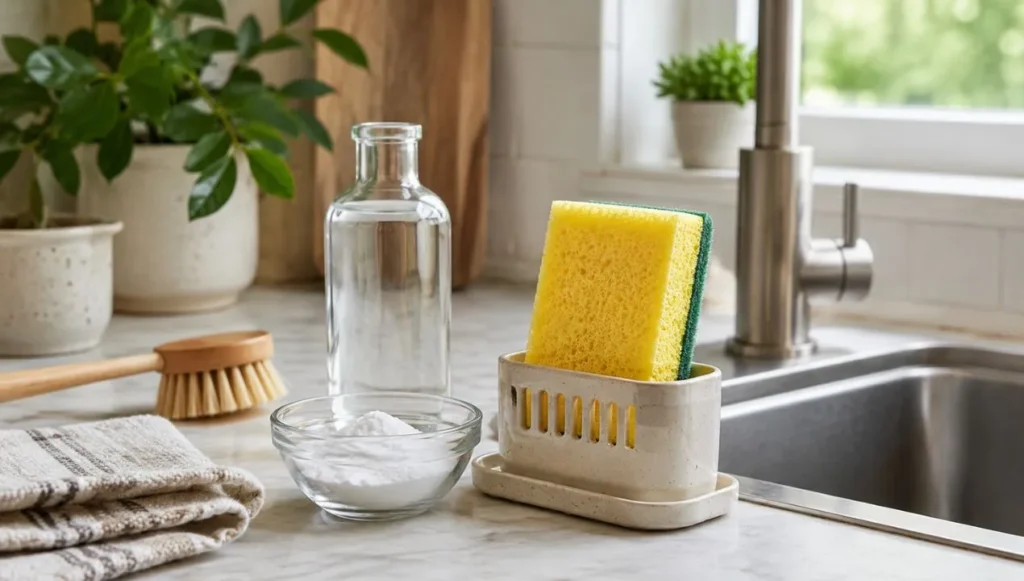
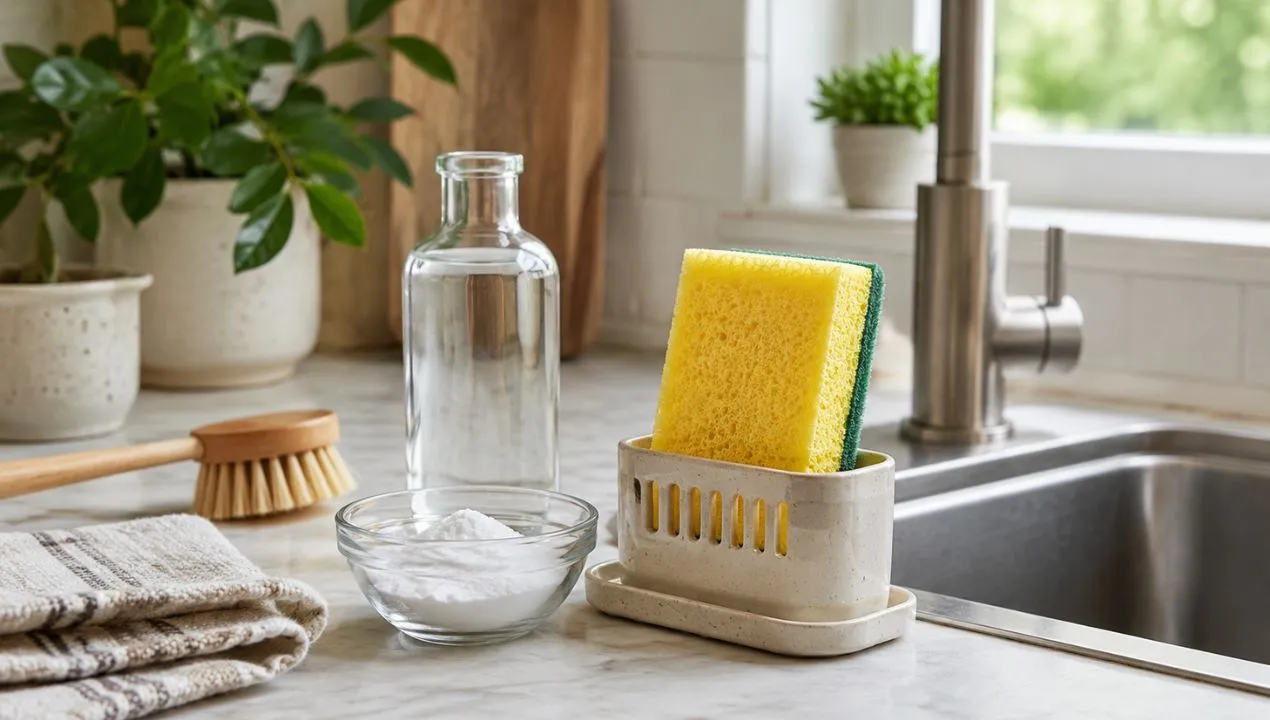
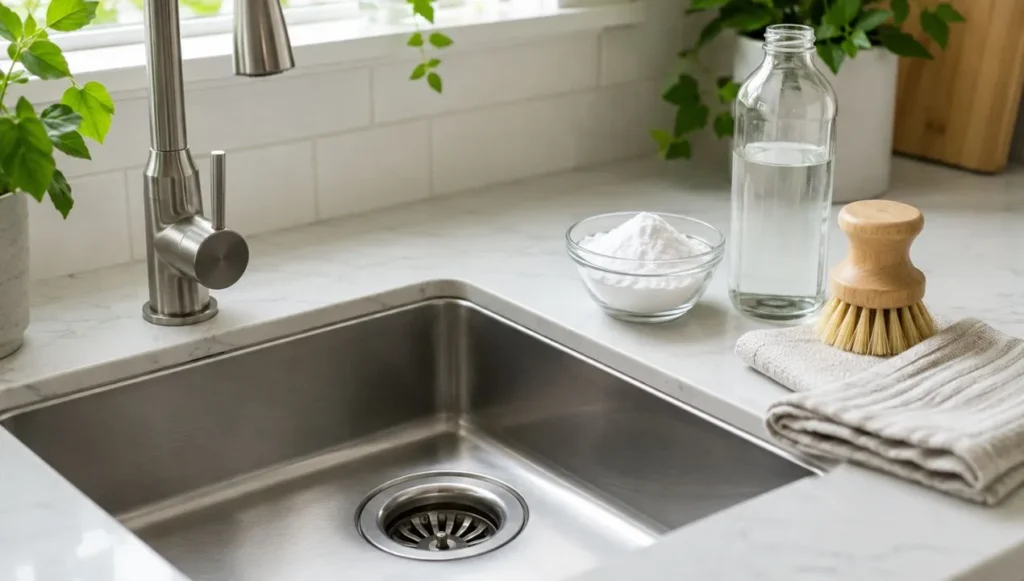
A bright kitchen sink with natural light, a clean drain area, a small bowl of baking soda, a clear unbranded bottle of white vinegar, a scrub brush, and a fresh dish towel. No text in the image.
Alt text:
Natural sink drain cleaning with baking soda, vinegar, hot water, and a clean kitchen sink.
FAQs
Why does my sink drain smell bad?
A sink drain usually smells bad because food, grease, soap scum, hair, or stagnant water is trapped inside the drain. Kitchen sinks often smell because of grease and food residue, while bathroom sinks usually smell because of hair, toothpaste, soap film, and buildup around the stopper.
How do I remove bad smell from sink drain naturally?
Clean the drain opening and stopper first, then flush the drain with hot water. Add baking soda, let it sit briefly, then use white vinegar if no chemical cleaner or bleach has been used. Finish by rinsing thoroughly with hot water. Keep the drain clear and dry around the surface to prevent odor from returning.
Can baking soda and vinegar remove sink drain odor?
Baking soda and vinegar can help with mild drain odors and light buildup near the drain opening. The fizzing action may loosen some residue, but it is not a guaranteed fix for deep clogs, heavy grease buildup, or plumbing problems. Always rinse well afterward.
Why does my bathroom sink smell like sewer?
A sewer-like smell may come from a dry trap, plumbing vent issue, or deeper drain problem. Run water first, especially if the sink is rarely used. If the smell continues, becomes stronger, or appears in several drains, it may need professional plumbing attention.
How can I stop my kitchen sink from smelling again?
Keep food scraps, coffee grounds, and grease out of the drain. Use a sink strainer, rinse with hot water after washing greasy dishes, clean the drain rim regularly, and freshen the drain with baking soda when needed. If you have a garbage disposal, clean the splash guard because food residue often hides there.