Uniswap is a decentralized exchange protocol that lets people swap digital tokens through smart contracts rather than a traditional order book or a company holding their funds. Its automated market maker model uses token pools to quote trades, while its permissionless design lets users interact with supported markets directly from a crypto wallet.
That accessibility comes with trade-offs. A swap can incur network fees and price impact, and a token’s presence on Uniswap does not establish that it is legitimate or safe. Liquidity providers face a different set of risks, including impermanent loss. Understanding how the protocol works—and what it does not guarantee—can help traders and liquidity providers make better-informed decisions.
What is Uniswap?
Uniswap is a decentralized exchange, or DEX, built around smart contracts. Instead of matching buyers and sellers through a conventional order book, its contracts enable token swaps against pools of assets deposited by liquidity providers. The protocol originated on Ethereum and has become a prominent example of automated market making in decentralized finance, often shortened to DeFi.
Uniswap is not the same thing as a centralized exchange account. A user generally connects a self-custody wallet and signs transactions, retaining control of the wallet’s private keys. The protocol’s contracts execute the swap; a website or wallet interface can help users access those contracts, but the interface is not itself the exchange mechanism.
This distinction matters. A decentralized protocol can offer open access without making every part of the experience risk-free or fully decentralized. Users still rely on blockchain networks, smart contracts, wallet software, and interfaces. They are also responsible for checking the token and transaction details before signing.
How does Uniswap work?
At a basic level, a trader selects the token they want to exchange and the token they want to receive. The interface checks available liquidity and displays an estimated output. When the trader approves and submits the transaction, a smart contract processes the swap using assets held in a pool. The final amount can differ from the estimate if the market moves or the transaction encounters price impact or slippage.
What is an automated market maker?
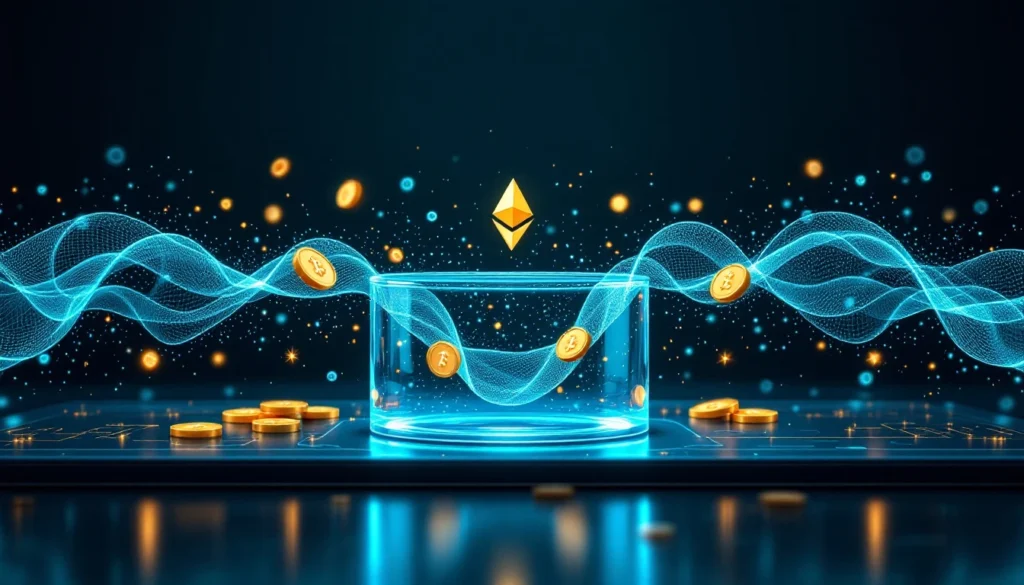
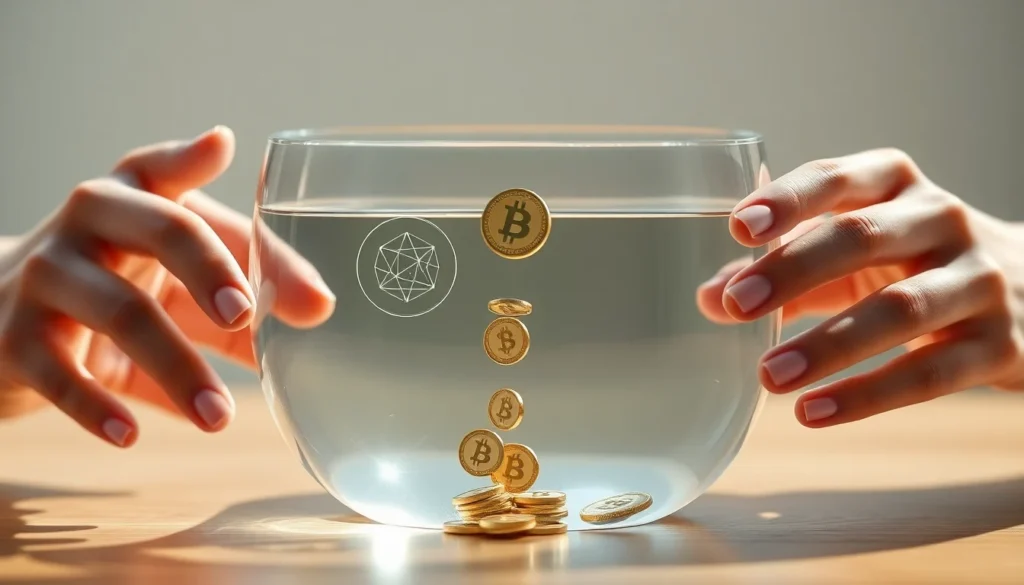
An automated market maker, or AMM, is a system that uses a pool and a pricing rule to facilitate trades. It does not need a specific buyer and seller to submit matching orders at the same time. Instead, a trader exchanges against the pool, changing the relative quantities of its tokens. That change affects the price available for subsequent trades.
In the original Uniswap model, a pool holds two tokens and follows a constant-product relationship. The product of the pool’s token quantities is kept approximately constant as trades occur, apart from fees and other implementation details. If a trader removes more of one token from the pool, that token becomes scarcer relative to the other and its price rises within the pool.
The result is not a fixed price guarantee. A larger trade relative to a pool’s available liquidity generally causes more price impact. A market with deeper liquidity may accommodate a given trade with less impact than a shallow one, though actual execution also depends on conditions when the transaction is processed.
How is an AMM different from an order book?
A centralized exchange commonly displays bids and offers submitted by market participants. Traders may place limit orders and wait for another participant to take the other side. An AMM instead relies on assets already deposited in a pool and a contract-defined method for calculating an exchange rate.
Neither model eliminates market risk. Order books can have thin depth or fast-moving prices; AMM trades can incur price impact, slippage, and network costs. The practical difference is how liquidity is organized and how a trade finds its counterparty: a pool and smart contract rather than a matched order.
What does a Uniswap token swap involve?
A swap is a blockchain transaction, not simply an instruction saved by a website. The user connects a compatible wallet, chooses the token pair and amount, reviews the quoted output and transaction settings, and signs. The transaction is then submitted to the network where the relevant contracts operate.
For many tokens, the wallet must first grant a smart contract permission to spend the token. This is called a token approval. An approval is separate from the swap itself and can persist according to its allowance settings. Users should check which token and contract they are authorizing and avoid approving unfamiliar requests without understanding them.
Before signing, check the token contract address, the amount to be spent, the estimated amount to be received, the price impact, and the slippage tolerance. Token names and symbols can be copied, so searching a name alone is not a reliable way to identify an asset. A transaction sent to the wrong contract or an incompatible network may not produce the intended result.
What are slippage and price impact?
Price impact is the effect a trade has on the pool’s price as it changes the pool’s token balances. Slippage describes the difference between an expected execution and the price ultimately received. Slippage can arise because the market changes while a transaction is pending or because the transaction is executed after other trades have changed the pool.
Slippage tolerance sets a limit on how much the received amount may vary before a transaction is rejected. A very tight tolerance can cause a transaction to fail in a volatile market; a looser setting can allow a less favorable execution. It is not a way to guarantee a better price. Review the interface’s current estimate and settings rather than assuming a displayed quote will remain unchanged.
Why do people use Uniswap?
Uniswap’s main appeal is that users can access token markets without opening an account with a centralized exchange or depositing funds with that company. The protocol is permissionless at the contract level: users can interact with available pools, and projects can create markets without the conventional exchange-listing process. That openness can make a wide range of tokens accessible, including assets that may not appear on centralized platforms.
Permissionless access is also a reason for caution. A token being tradable does not mean Uniswap has vetted its issuer, code, claims, or market. A pool can have little liquidity, and a token may be associated with misleading branding or harmful contract behavior. Users must verify the asset independently and understand that access is not an endorsement.
Developers also build tools and services around Uniswap’s open smart-contract infrastructure. This composability is a core feature of DeFi: other applications may interact with liquidity pools or use protocol components as part of broader products. Composability can support experimentation, but it also means that the risks of a connected application may extend beyond a simple swap.
How do liquidity providers earn fees?
Liquidity providers, often called LPs, deposit eligible tokens into a pool so traders can swap against that liquidity. In return, they may receive a share of trading fees under the pool’s rules. The amount an individual provider receives depends on factors such as the pool, the provider’s share of liquidity, the fees generated, and the way liquidity is positioned.
Providing liquidity is not the same as earning a guaranteed yield. Trading activity can be uneven, token prices can change, and the value of a provider’s position can diverge from the value of simply holding the deposited assets. A high fee rate alone does not establish that a pool is attractive; it should be considered alongside liquidity, volatility, fees, and the provider’s exposure.
What is impermanent loss?
Impermanent loss is the difference between the value of assets held in a liquidity position and the value those assets would have had if they had simply remained in the provider’s wallet. It can occur when token prices move relative to one another, because the pool’s mechanism changes the quantities of assets held as traders swap.
The term does not mean the loss is imaginary or guaranteed to reverse. The difference can change as prices move, and withdrawing liquidity can make the result concrete. Trading fees may offset some or all of that difference in some circumstances, but there is no assurance they will. Providers should assess the pool’s assets, their expected price movements, fee conditions, and the mechanics of the specific liquidity position before depositing.
What risks should Uniswap users consider?
Uniswap reduces reliance on a centralized custodian for a direct wallet swap, but it does not remove the risks of crypto trading. The main risks differ depending on whether someone is swapping tokens or supplying liquidity.
- Smart-contract risk: A flaw or unexpected behavior in a contract can put funds at risk. Audits and time in operation may inform an assessment but cannot guarantee safety.
- Token risk: Permissionless markets can include experimental, misleading, or malicious tokens. Verify the contract address and do not treat availability as approval.
- Price impact and slippage: A swap may execute at a worse rate than expected, especially when liquidity is limited or conditions change quickly.
- Network fees: Transactions require fees on the blockchain being used. Costs can vary with network conditions, and a failed transaction may still consume resources.
- Liquidity-provider exposure: LPs can experience impermanent loss, changing asset balances, and other pool-specific risks.
- Wallet and approval risk: Users can lose access through compromised keys or sign transactions they did not intend. An approval can authorize spending beyond a single swap, depending on its terms.
- Interface and network risk: A user can encounter a fake website, connect to the wrong network, or rely on inaccurate token information.
Because swaps and approvals are generally not reversible in the way a credit-card payment may be, careful review matters. Use the intended network, access the protocol through a trusted route, verify addresses, and never share a wallet’s recovery phrase. For an unfamiliar token or a new workflow, a smaller transaction may help confirm that the process behaves as expected, but it does not eliminate the underlying risks.
Why can Uniswap transactions be expensive?
Uniswap transactions require execution on a blockchain, and the network charges fees for processing them. On Ethereum, fees can rise when demand for block space is high. A swap may also involve multiple contract interactions, such as approving a token and then exchanging it, so the total cost can be more than one transaction fee.
Uniswap-related services have expanded beyond Ethereum mainnet to other supported networks, including layer-2 systems. These networks can offer different transaction costs and performance characteristics, but users must ensure that their wallet, assets, and chosen interface are all on the same network. A cheaper transaction is not automatically a safer or more suitable one.
Check the estimated network fee before signing. If the cost is disproportionate to the trade, waiting or comparing supported networks may be reasonable, provided the user understands any bridging or network-specific risks. Moving assets between chains is a separate operation from swapping tokens and can introduce additional steps and dependencies.
How has Uniswap’s liquidity model evolved?
The constant-product approach made it possible to create continuously available markets without traditional order books, but it places liquidity across a broad price range. Later design changes introduced concentrated liquidity, allowing providers to allocate capital within selected price ranges. This can make capital more efficient when the market stays within a provider’s chosen range, while requiring more active understanding of how the position behaves.
In a concentrated-liquidity pool, a position can become inactive for trading if the market moves outside its selected range. Its token composition can also change as prices move through that range. Providers therefore take on decisions about where to place liquidity and whether to adjust it. The approach can improve how capital is used, but it does not remove price risk or make fee income predictable.
Uniswap’s protocol has also developed through multiple versions and deployments. The exact features and mechanics available depend on the version, pool, and network. Users should consult the relevant interface and official documentation for the specific pool they intend to use rather than assume that every Uniswap market works identically.
Is Uniswap decentralized?
Uniswap is designed around smart contracts that can be accessed without a conventional central exchange approving each user or token. Its open-source software and permissionless pools support decentralized use. However, decentralization is not a simple all-or-nothing label for the entire experience.
Users may rely on a particular website, wallet, network, or data service to find and use pools. Governance and protocol development are separate from the execution of an individual swap, and a front end can have different controls from the underlying contracts. A user interacting directly with contracts may have a different experience from someone relying on a hosted interface.
For practical purposes, distinguish the protocol’s contracts from the interface used to reach them. A website can be unavailable or altered without necessarily changing the underlying contracts, while a contract interaction can still carry technical and financial risk. The word decentralized should not be read as a promise of anonymity, uninterrupted access, or protection from loss.
Who might use Uniswap—and who should be cautious?
Uniswap may suit people who understand self-custody and want to swap supported tokens directly from a wallet, or who are prepared to evaluate the risks of providing liquidity. It can also be useful to developers exploring open financial infrastructure. In each case, the user needs to manage network fees, token verification, transaction approvals, and the possibility of loss.
It may be a poor fit for someone who expects a customer-support team to reverse a mistaken transfer, wants a guaranteed exchange rate, or cannot tolerate substantial volatility. A wallet-based interface does not remove the need to understand what is being signed. New users should learn how approvals, transaction fees, and token addresses work before committing meaningful funds.
Uniswap is best understood as infrastructure for peer-to-pool token trading, not as a recommendation to buy a particular asset. Its central innovation is a way to make markets operate through pools and smart contracts. Whether a specific swap or liquidity position makes sense depends on the assets, market conditions, costs, and the user’s ability to bear risk.
Frequently asked questions
Is Uniswap free to use?
There is generally no conventional account fee to access a swap, but transactions require blockchain network fees, and trades may include protocol fees determined by the pool. The total cost depends on the network, transaction, and market conditions.
Can anyone list a token on Uniswap?
Uniswap’s permissionless design allows markets to be created without the traditional exchange-listing approval process. That does not mean every token is safe, liquid, or reviewed. Verify a token’s contract address and research its risks independently.
Does Uniswap hold users’ crypto?
For a typical wallet-based swap, users interact with smart contracts from a self-custody wallet rather than depositing funds into a conventional exchange account. The wallet owner remains responsible for safeguarding keys and checking each transaction. Liquidity providers, by contrast, place assets into a pool under its contract rules.
Can liquidity providers lose money?
Yes. Token prices can move, and a liquidity position may be worth less than holding the same assets outside the pool. Trading fees might offset some losses, but they are not guaranteed to do so. Smart-contract and token risks also apply.
Is every token on Uniswap legitimate?
No. Permissionless access means users may encounter assets that have not been vetted by the protocol. A familiar name or symbol is not enough to authenticate a token; confirm its contract address through reliable project information and consider liquidity and other risks before trading.