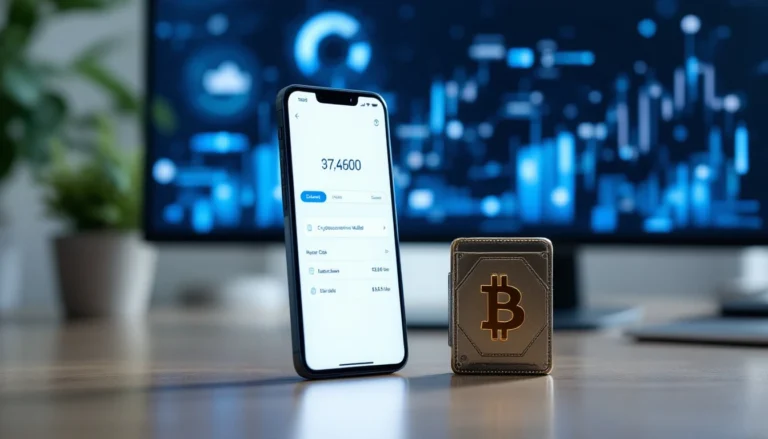
DexScanner is presented as a tool for reviewing decentralized exchange (DEX) activity, including token prices, trading volume, liquidity, and other market data. That kind of information can help traders investigate a token or liquidity pool before acting, but a scanner is not a guarantee of accuracy, safety, or profit. The available description of DexScanner lists Ethereum, Binance Smart Chain, Polygon, and Avalanche among its supported networks; network coverage and features can change, so confirm current details directly with the service before relying on them.
This guide explains what a DEX scanner can help you assess, how to use the information responsibly, and what DexScanner’s stated capabilities do—and do not—establish. It also covers common DeFi risks that market dashboards cannot eliminate.
What is DexScanner?
DexScanner is described as a platform for examining decentralized exchange markets across multiple blockchain networks. Its stated purpose is to bring information such as token activity, prices, trading volume, liquidity, and historical performance into a place where users can review it.
A DEX scanner is generally an analysis interface, not the decentralized exchange itself. It can help a reader find or inspect market activity, while a trade is typically carried out through a separate exchange interface or wallet-connected application. The available description does not establish that DexScanner executes trades, provides custody, or guarantees that every displayed market is supported. Check the service’s current documentation before assuming any of those functions are available.
The distinction matters. A dashboard can make activity easier to inspect, but it does not control a token’s smart contract, determine whether a project is legitimate, or protect a user from a poor transaction. Treat DexScanner as a possible research aid rather than a substitute for independent verification.
What information can a DEX scanner help you review?
The source description attributes several types of market information to DexScanner. The usefulness of each depends on coverage, update frequency, and how clearly the data is defined. Before making a decision, identify the chain and trading pair you are looking at and confirm that the displayed figures correspond to the intended asset.
Price and trading activity
Price charts and recent transaction activity can show how a token has traded over a selected period. Volume can help put a price move in context: a sharp change accompanied by little trading may tell a different story from a move involving substantially more activity. Neither price nor volume predicts what happens next. Data can also vary between venues or be affected by thin trading.
Liquidity and pool information
Liquidity refers broadly to the assets available for trading in a market or pool. A pool with limited liquidity may be more sensitive to individual trades, which can make the price a trader receives differ from the displayed quote. A scanner may help users locate pool information, but a headline liquidity figure is only one part of the assessment. It does not by itself establish that liquidity will remain available, that it can be withdrawn, or that a token is safe.
Historical data
Past price and volume records can help users examine how a market behaved during earlier periods. Historical charts are descriptive, not predictive. A token that rose quickly in the past may fall just as quickly, and a short trading history offers less context than a longer one. Consider the chart’s time range and the market’s trading depth rather than treating a past trend as a forecast.
Wallet and transaction activity
The description also refers to wallet activity and transaction histories. These records may help users investigate notable movements, but a wallet address alone does not reliably identify the person or organization controlling it. Nor does an unusual transaction prove fraud. Use wallet data as a lead for further investigation, not as a verdict about a project.
How to use DexScanner as part of a token review
A consistent process is more useful than reacting to a single chart, volume spike, or wallet movement. The steps below apply to DEX research generally. They do not assume that every function is currently available in DexScanner.
- Confirm the network and asset. Check that the token is on the chain you intend to use. Similar names and symbols can refer to different contracts. Where possible, verify the contract address through a source you trust rather than relying on a display name alone.
- Check the trading pair and pool. Make sure you are looking at the relevant market, not a similarly named or inactive pool. Note which assets make up the pair and whether the market appears to have meaningful trading activity.
- Review more than the latest price. Compare recent price movement with volume and the selected chart period. A single point or short-term jump can be misleading without context.
- Assess liquidity and execution risk. A quoted price may not be the price available for the size of trade you have in mind. Low liquidity can increase slippage, while network fees and transaction conditions can affect the final result.
- Investigate activity cautiously. If wallet or transaction records are available, look for context and patterns rather than drawing a conclusion from one transfer. Public blockchain data can show transactions without explaining their purpose.
- Verify important details elsewhere. Confirm contract, pool, and project information using independent sources. If a detail cannot be confirmed, treat it as uncertain rather than filling the gap with assumptions.
- Decide whether the risk fits your situation. A scanner presents information; it cannot determine your financial goals, risk tolerance, or ability to absorb a loss.
This workflow helps separate observation from interpretation. For example, a sudden increase in volume is an observable data point. The explanation—new interest, a large holder moving assets, wash activity, or another cause—requires evidence beyond the number itself.
Can DexScanner help identify a risky token?
It may help users notice signals that deserve closer examination, such as unusual trading patterns or significant wallet movements, if those data are available and correctly presented. It cannot reliably certify a token as safe. A dashboard should not be treated as an audit, a legal review, or a guarantee against fraud.
Risk checks should be specific. Confirm the contract address, inspect the pool and trading pair, review available transaction history, and look for information about the project and its token mechanics. These checks can still leave important questions unanswered. A contract may contain behavior that is difficult for a non-specialist to assess, and an apparently active market does not establish the credibility of the people behind a project.
Terms such as “rug pull” are often used broadly for situations in which users lose access to expected value or liquidity. Wallet movements can be relevant clues, but interpreting them requires care: addresses may have multiple purposes, ownership may be unclear, and transfers can have explanations that are not visible from a basic market screen. Avoid labeling a project based on one transaction alone.
What DexScanner’s data cannot tell you
Market data is useful only within its limits. A price chart does not show whether a token’s code has been independently reviewed. A liquidity figure does not necessarily explain who controls the assets or what conditions govern their removal. Volume does not prove organic demand. A wallet history does not reveal a person’s identity or intentions.
There may also be differences between a scanner’s display and the conditions a user encounters when submitting a transaction. Data can be delayed, incomplete, or affected by the particular pool and network being examined. The available source description does not specify DexScanner’s data providers, update intervals, methodology, or coverage rules. Users should look for those details in current product documentation and avoid treating an unverified number as definitive.
Likewise, the source describes DexScanner as supporting several networks, but that statement is not a live confirmation of present-day integrations. Before relying on the tool for a specific chain or DEX, check whether the relevant network, exchange, token pair, and data type are currently covered.
Why multi-chain coverage matters—and where it can fall short
Decentralized markets operate across multiple blockchains, and the same token concept or brand may appear in more than one ecosystem. A multi-chain interface can make it easier to compare activity without switching among separate dashboards. The source description names Ethereum, Binance Smart Chain, Polygon, and Avalanche as supported networks, while also acknowledging that newer chains or smaller DEXs may not be integrated.
Coverage should not be confused with completeness. A tool may display a network but not index every exchange, pool, or token on it. Even where a market appears, the available history or analytics may differ. When comparing two assets across chains, confirm that the records refer to the correct contracts and comparable time periods. Differences in liquidity, fees, and market structure can make a simple side-by-side price comparison incomplete.
For a trader, the practical question is not merely “Does this scanner support the chain?” It is “Does it cover the specific market and data I need, and can I verify the result?” If the answer is unclear, consult the exchange or blockchain data directly before acting.
Is DexScanner suitable for beginners?
A consolidated dashboard may reduce the effort involved in finding basic market information, but it does not remove the learning curve of DeFi. New users still need to understand networks, token contracts, trading pairs, liquidity, wallet transactions, and the consequences of signing blockchain transactions. The source description itself notes that the volume of available information may feel overwhelming to beginners.
Start with a narrow question—for example, whether a particular pair has recent activity—rather than trying to interpret every chart and metric at once. Learn what a figure represents before using it. If an indicator is not defined in the interface or documentation, do not assume its meaning from its label alone.
Beginners should also distinguish browsing from transacting. Looking at a market page is not the same as connecting a wallet or approving a transaction. Never connect a wallet or sign a request simply because a dashboard recommends it; understand what an application is asking you to authorize and verify that you are using the intended site.
DexScanner compared with a token-price website
A general price-tracking site may be useful for broad market discovery and historical price comparisons. A DEX-focused scanner is intended to help users inspect decentralized exchange activity, including pools and on-chain market data. The exact distinction depends on each service’s current coverage and features, so it is better to compare what data is available than to assume one category is always more complete.
CoinGecko is listed in the source as a resource for tracking token prices and market data. That does not establish that its coverage or figures will match DexScanner’s for every asset or pool. When two services show different values, check the asset contract, market, pair, timestamp, and methodology before deciding that one is wrong. Different venues can report different market conditions.
Common mistakes when interpreting DEX analytics
- Equating a listing with legitimacy. A token appearing in a scanner does not mean it has been vetted or endorsed.
- Reading volume as proof of demand. Volume is a measure of reported trading activity, not a complete explanation of who traded or why.
- Ignoring liquidity when viewing price. The displayed price may not be achievable for a larger transaction in a thin market.
- Assuming a wallet address reveals its owner. Public transaction records do not automatically identify the person or entity behind an address.
- Trusting a single data source. Cross-check important details, especially contract addresses and pool information.
- Treating historical performance as a forecast. Past movement cannot guarantee future results.
- Assuming every chain or DEX is included. Confirm current integration and data coverage for the market you care about.
What to verify before relying on DexScanner
The source points readers to DexScanner’s official website at dexscanner.io. Because product features and integrations can change, use the current site or documentation to confirm what the service offers. In particular, check the supported networks and exchanges, the meaning and freshness of displayed metrics, and whether the information is intended for discovery, analysis, or another purpose.
Also establish what the tool does not do. Unless current documentation explicitly says otherwise, do not assume it executes trades, audits contracts, prevents scams, or offers investment advice. A clear understanding of the boundary between analytics and protection can prevent a convenient interface from creating a false sense of security.
Frequently asked questions
What is DexScanner used for?
DexScanner is described as a platform for reviewing decentralized exchange data, including token prices, trading activity, liquidity, and historical information. Confirm its current features and coverage with the service before relying on a particular metric or network integration.
Is DexScanner a cryptocurrency exchange?
The available description presents DexScanner as an analysis tool, not as an exchange. It does not establish that users can execute trades through the platform. Check the current official documentation for a definitive description of its functions.
Which blockchains does DexScanner support?
The source description lists Ethereum, Binance Smart Chain, Polygon, and Avalanche. That list may not reflect current coverage, and support for a chain does not necessarily mean every DEX or pool on it is indexed. Verify the specific network and market directly.
Can DexScanner guarantee that a token is safe?
No scanner can establish safety from market data alone. Price, liquidity, volume, and wallet activity may help identify questions to investigate, but they do not replace contract review, independent verification, or careful risk assessment.
Is DexScanner free to use?
The available information does not specify pricing, account requirements, or whether some features require payment. Check DexScanner’s current website for its access and pricing terms instead of assuming the service is free.